Networking & Executive Presence
One area that I frequently get asked to talk about is networking. As part of our OCOM Master Class Transformative Leadership Series, I was asked to speak on Networking and Executive Presence. I am excited to share what I know with them. I felt it might be an interesting blog for the OCOM Dean’s Blog series.
I believe that the quality of our lives is dependent on the quality of our relationships and that the quality of an organization is dependent on the quality of the relationships of an organization. Developing relationships takes time and work and that we always have to be working on them. Developing and maintaining quality relationships involves authenticity, sincerity, empathy, and work. For the purposes of this blog, I focus on the work that goes into the networking as well as the executive presence of a leader. I also discuss executive presence as a different, but interrelated aspect of leadership in this blog
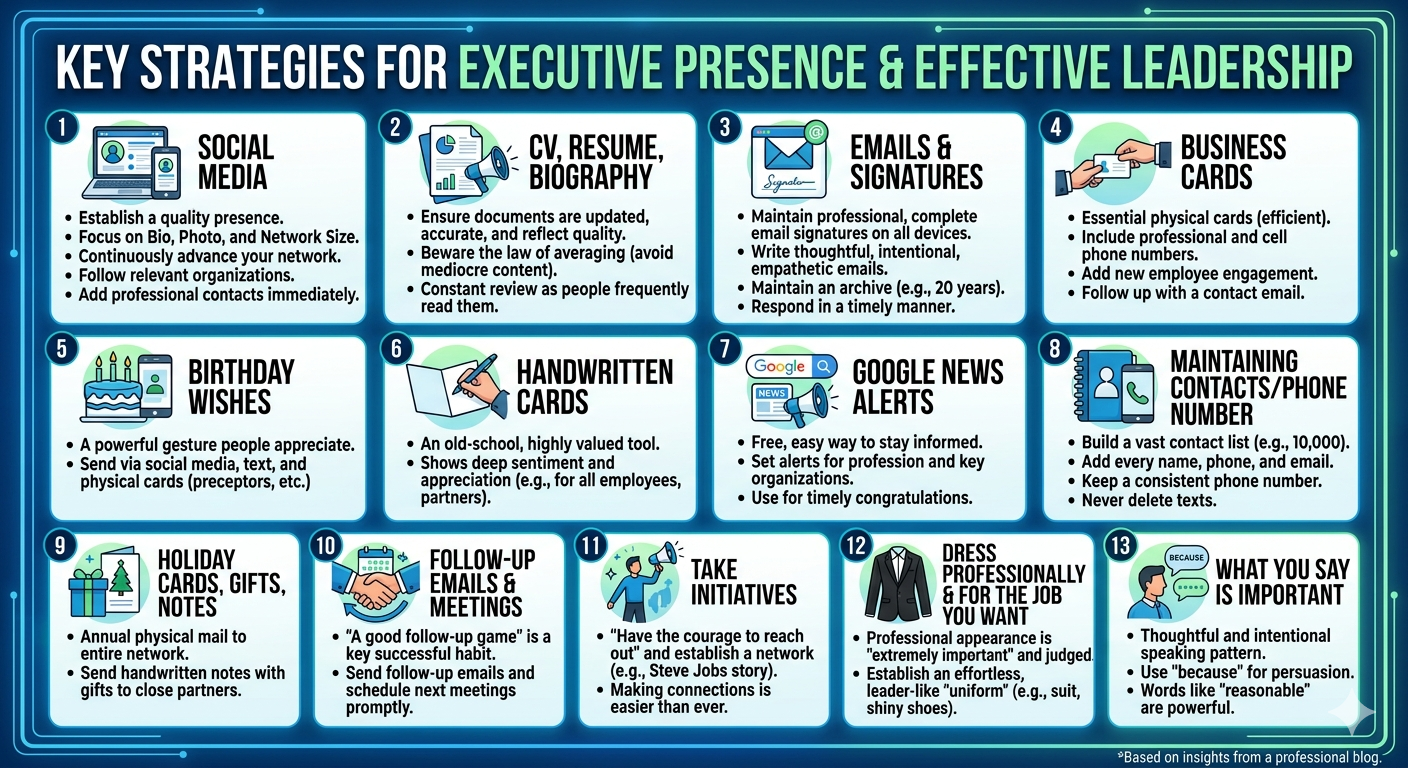
Below are behaviors that I have incorporated into my life that help me grow and maintain my professional network and executive presence:
Social Media: Having a social media presence has turned into an indispensable tool for effective leaders in the modern era. People look at your social media and they pay attention to your biography, photo, size of network, and quality of your professional posts. It has also turned into an important way that leaders communicate with their relevant communities. It is important that all aspects of your social media are quality and that you continuously work to advance your network and executive presence on social media. It is also important to follow organizations that you are interested in and work with, as it is a powerful tool to be an engaged member of your personal network of contacts. It is also important to add all of your professional contacts to your LinkedIn as you meet them.
CV/Resume/Biography: People are constantly reading my biography, and I get asked for my CV nearly weekly (usually if I am speaking publicly). It is important that these are accurate, updated, and reflect your personal style and quality. It is also important to remember that the law of averaging in your biography - if you describe something really great and then something mediocre, the reader’s mind averages those two things.
Emails and Email Signatures: I often get emails from folks who have not set up their professional email signatures on one or more of their devices (e.g., no corporate logo, no signature line, etc.). This error of omission can subtly communicate a number of things about that person and none of them are good. Conversely, trusted and respected leaders always have email signatures with all of the expected elements. Additionally, it is important that our emails are thoughtful, intentional, empathetic, and professional. When in doubt, it is helpful to run emails through AI to get the tone that you are hoping for. I also believe in maintaining your email addresses as well as old emails. I have nearly every email that I have received or sent in the past 20 years and I have found this an incredibly important resource. It is also important to timely respond to emails - it completes closed-loop communication and is a way of demonstrating your responsiveness and reliability.
Business Cards: I believe that it is important to still have physical business cards.I am an avid lover of technology, but nothing beats the efficiency of handing over a physical business card. At OCOM, all new employees get physical business cards on their first day - it is inexpensive, an important tool, and fosters new employee engagement. I nearly always follow up with an email with an email that has all of my contact information on it (including my cell phone). I also am a big believer in having your personal cell phone on business cards. It is the way that people communicate nowadays.
Birthday Wishes: Most people appreciate the kind gesture when you recognize their birthday. If you are friends with me on social media, you have received birthday wishes. I also text birthday wishes to everyone that I have in my contacts. Additionally, we send birthday cards out to our entire network of preceptors.
Handwritten Cards: Handwritten cards are definitely an old school tool that people seem to appreciate more than ever. Every OCOM employee received handwritten holiday cards and I try to frequently remember to give handwritten cards to folks expressing my sentiment.
Google News Alerts: Google News Alerts are free and easy to sign up for. Every day, I receive news alerts for my profession as well as every important organization that I have signed up for. It is an incredibly important tool to keep up with my network and to engage folks. I will frequently send congratulations based upon good news that I hear related to someone in my network and allows me to stay closely connected.
Maintaining Contacts/Phone Number: In my phone, I have about 10,000 contacts (cell phone numbers, emails, etc.). I have also kept the same cell number for over 20 years. I am excellent about adding names, phone numbers, and emails to my contacts app. This is one of the most powerful tools that I have and I can contact any of the 10k contacts by email, text, or phone whenever the need arises - and arises it does. I also never delete a text, which is a habit that has proven to be extremely valuable over the years.
Holiday Cards, Gifts, and Notes: Every holiday, we send holiday cards out to every clinical faculty member. We send gifts out (and I send handwritten notes) to every one of our close partners (e.g., hospitals, universities, etc.).
Follow-Up Emails and Meetings: One area that has been extremely helpful is to send follow-up emails and set follow-up meetings, when appropriate. Having a good follow-up game is probably one of the habits that I see in the most successful people.
Take Initiatives: Steve Jobs had a famous story about when he called the President of Hewlett Packard when he was a kid - it led to opportunities and he felt that him taking the initiative to do it was a unique characteristic that he had that others don’t - the courage to reach out and establish the network. It has never been easier than it is now to reach out and establish connections and relationships.
Dress Professionally and for the Job that You Want: I have worn a suit or lab coat every day of my professional life, and it has paid dividends. Your professional appearance is extremely important. Despite what people say, I am convinced that we are judged by our professional appearance. For my complicated life, I have established a professional outfit that I wear every day (black suit, white shirt, shiny black shoes). This outfit takes me zero time to think about, doesn’t cost me much to maintain (happy to tell you the back story), and I am comfortable in any meeting or environment, and I always look like a leader. Please note that I typically don’t wear a tie after suffering a carotid dissection in 2019, and my neurologist advised against it.
What you Say is Important: Executive presence isn’t just the way you look, carry yourself, or your online presence. It is also what you say and what you say is important. The famous copier study from the 1970s established the importance of using the word “because” and how it influences persuasion and how you are perceived. Including the word “reasonable” is more likely to get a yes when you ask a question. Having a thoughtful and intentional speaking pattern is expected in modern day leaders.
I hope that these brief recommendations help you grow your network, establish better relationships, and improve your executive presence for the outcomes that you want.